Dry Winter Air and Cold Floors: Humidifiers and Radiant Heat for Chicagoland Homes
Two upgrades aimed at the same complaint: a house that is warm on the thermostat but not on your skin or your feet.
October 16, 2026 · 4 min read
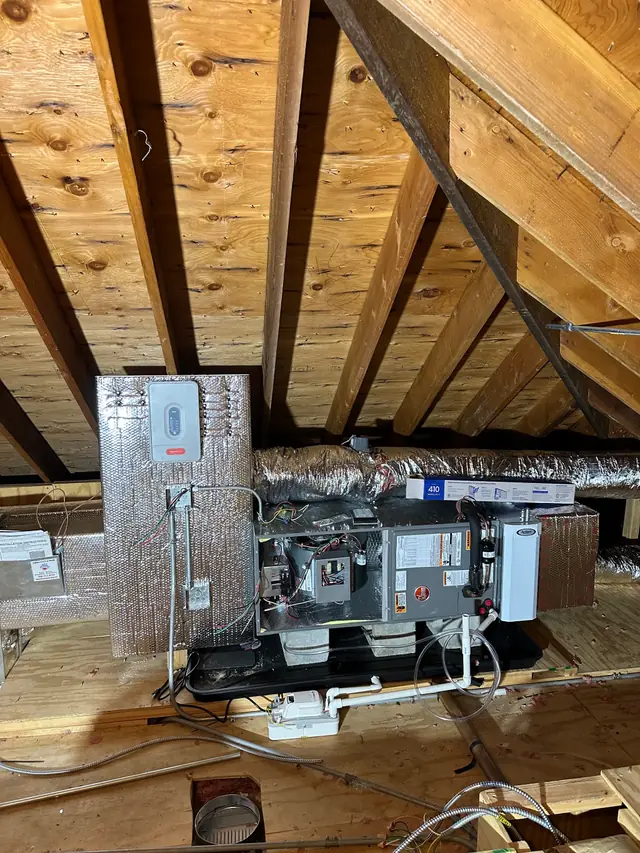
You set the thermostat to 70 and still feel cold. Your skin cracks, the static shocks you at the door handle, and the hardwood floor feels like a rink under your socks. If that sounds like your January in Tinley Park, Palos Hills or New Lenox, you are not imagining it. Two things are usually in play: the air is too dry, and the floors are too cold.
Why winter air gets so dry indoors
Cold outdoor air holds very little moisture. When that air leaks into the house and the furnace warms it up, the relative humidity drops fast. Run the heat for months and you get an indoor climate drier than many people expect. Cold, dry air also feels colder than the number on the thermostat suggests, which tempts people to crank the heat higher and burn more fuel.
You can spot dry air without any gadgets. Look for the signs.
- Static shocks on carpets, doorknobs and pets.
- Dry skin, chapped lips, scratchy throats and nosebleeds, especially at night.
- Wood floors that gap between boards and trim that opens at the joints.
- Houseplants that crisp up in winter.
- A house that feels chilly even at a normal thermostat setting.
How a whole-home humidifier works
Portable humidifiers help one room and need constant refilling and cleaning. A whole-home humidifier connects to your furnace and ductwork and adds moisture to the air as it circulates. It is typically installed on the furnace or the supply duct, tied into a water line, and controlled by a humidistat that reads the humidity in the house. Some are installed in an attic next to an air handler and foil-wrapped duct, a common spot when the equipment lives upstairs.
A few points are worth knowing before you add one.
- Setting matters. Too little moisture leaves you dry, and too much on a very cold day can put condensation on windows. The right setting shifts with outdoor temperature.
- Maintenance is part of the deal. Pads, water panels and drain parts need regular attention, or the unit stops doing its job.
- Your furnace and ducts matter. Moisture moves through the same system, so leaky or poorly sealed ductwork will undercut results.
- It is not a fix for a damp basement. If you have moisture problems below grade, that is a different conversation.
Climaxx handles humidifier maintenance, repairs, installation and sales, so an existing unit that stopped working is also a good reason to call.
Why floors feel cold, and what radiant heat does about it
Forced air heats the room from the ceiling vents or floor registers, and warm air rises. That leaves the floor as the coolest surface in the room, especially over an unheated basement, a crawl space or a slab. Walk across tile in bare feet on a January morning and you know exactly what that means.
Radiant heat in the floor works the other way around. Instead of blowing warm air, the heating sits in or under the flooring and warms the surface itself. As Climaxx puts it, radiant heat in flooring keeps floors nice and warm and transfers heat into the living area. The warmth comes up from your feet, so the room feels comfortable without needing as much blown air.
Where radiant heat makes the most sense
- Bathrooms and kitchens with tile floors that never warm up on their own.
- Finished basements over a slab, where the cold comes up from the concrete.
- Additions and remodels, when the floor is already open and it is easiest to put heat in.
- Rooms that never feel right, such as a sunroom or an above-garage bedroom.
Radiant systems are best planned into a project instead of bolted on afterward, because the floor has to be opened up or built with it in mind. If you are remodeling a room in Lemont or Orland Park, bring it up early with your contractor. It is far easier before the finish flooring goes down.
Using both together
They solve different problems. Humidification fixes dry air throughout the house. Radiant heat fixes cold surfaces in specific rooms. Plenty of homes want one or the other, and some get real benefit from both. Humidity can make a cooler room feel more comfortable, and warm floors let you live with the thermostat a touch lower. Neither replaces a healthy furnace or boiler. They sit on top of the basics, so get those right first.
A quick plan for this winter
- Check your existing humidifier, if you have one. Is the water panel clean, and is the humidistat set sensibly for the outdoor temperature?
- Notice which rooms feel coldest underfoot and write them down.
- If you are remodeling, mention radiant floor heat before the floor goes in.
- Book your furnace or boiler checkup, because every comfort upgrade depends on a healthy heat source.
Climaxx Heating & Cooling installs and services humidifiers and radiant heat across Homer Glen, Frankfort, Plainfield and the southwest suburbs. If your house is warm on the thermostat but not on your skin or your feet, call (708) 717-2772, any hour, and we can talk through what makes sense for your home.
Climaxx Heating & Cooling, (708) 717-2772
Call (708) 717-2772More articles
What SEER Actually Means When You Replace an AC in the Southwest Suburbs
A plain-English look at the efficiency number on the sticker, and how much of it your house will ever use.
AFUE Explained: 80% vs 95% Furnaces and When the Upgrade Makes Sense
Think of AFUE as the share of every dollar of gas that ends up warming your house instead of going up the flue.