Radiant heat

Radiant Floor Heat in Homer Glen, IL

Tired of cold floors and feet all winter long? Heat in the floor keeps it warm and carries that warmth into the room.

Why floors stay cold, and what heat in the floor changes

Tired of cold floors and feet all winter long? That is exactly the complaint radiant heat answers. A forced air system warms the air, and warm air rises, so a room can feel comfortable at head height while the floor underfoot stays cold. Radiant heat in the flooring turns that around by making the floor itself the heat source. The warmth comes up through the surface you are standing on and transfers into the living area above it.

Because the heat comes from below and spreads across the whole floor, it feels even instead of arriving in bursts from a register. There are no blowing vents to stir up the room, and tile, concrete and wood floors that feel icy in January become the warmest surface in the house. Climaxx lists radiant heat next to boilers and piping among its services, and that pairing is no accident: radiant heat is hot water work.

How radiant loops work, and why the boiler sits behind them

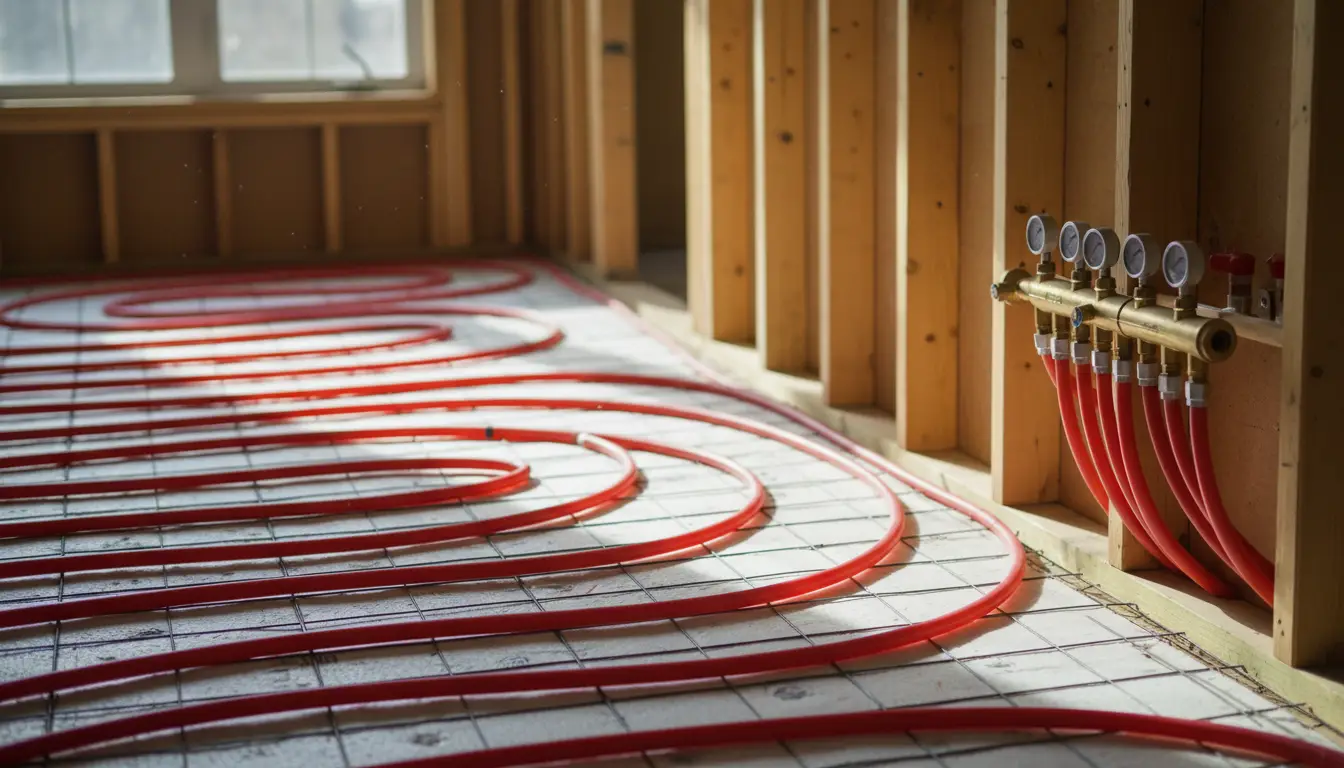
A hydronic radiant floor is a network of tubing laid in loops beneath the floor surface. Warm water from a boiler circulates through those loops, gives its heat to the floor, and returns to be heated again. A manifold on the wall acts as the distribution point, splitting the supply into separate loops and collecting the return, so each zone can be balanced and controlled on its own.

That is why this work sits so close to boilers. The boiler sets the water temperature, a circulator moves it, and the piping carries it, so the condition of every one of those pieces shows up in how the floor feels. Our boilers page explains how boiler age and a yearly clean and check affect efficiency, and the same logic applies when a boiler feeds floor loops. Leaks, air in the lines and a weak circulator are the usual reasons a radiant zone runs cold.

Planning radiant heat into a remodel

The best time for radiant heat is while the floor is open. Tubing goes in before the finished floor, so a remodel, an addition or a new build gives the cleanest path. Climaxx also does custom sheet metal and piping, which means the heating, ductwork and water lines of a project can be planned together instead of in separate pieces. Bring your plans and the rooms you want warm, and we will talk through what makes sense.

Planning questions come first: which rooms, what floor covering goes on top, where the boiler or water source is, and whether an existing boiler can carry the added loops. Those answers decide the layout before any tubing is laid. We serve Homer Glen and the towns around it, and the full list is on the service areas page. A conversation costs nothing, and it is far easier to change a plan on paper than a floor after it is finished.

Illustration: red PEX radiant tubing laid in loops on a subfloor with a brass manifold on the wall

Illustration: red PEX radiant tubing laid in loops on a subfloor with a brass manifold on the wall

Climaxx Heating & Cooling holds 4.9 stars on Google from 44 reviews. One customer wrote: “Justin and his team were professional, knowledgeable, and easy to work with.”

Radiant loops run on boiler water, so read the boilers page alongside this one. To talk through a floor, write through the contact page or call (708) 717-2772. See which towns we reach on the service areas page.