What SEER Actually Means When You Replace an AC in the Southwest Suburbs
A plain-English look at the efficiency number on the sticker, and how much of it your house will ever use.
October 16, 2026 · 4 min read
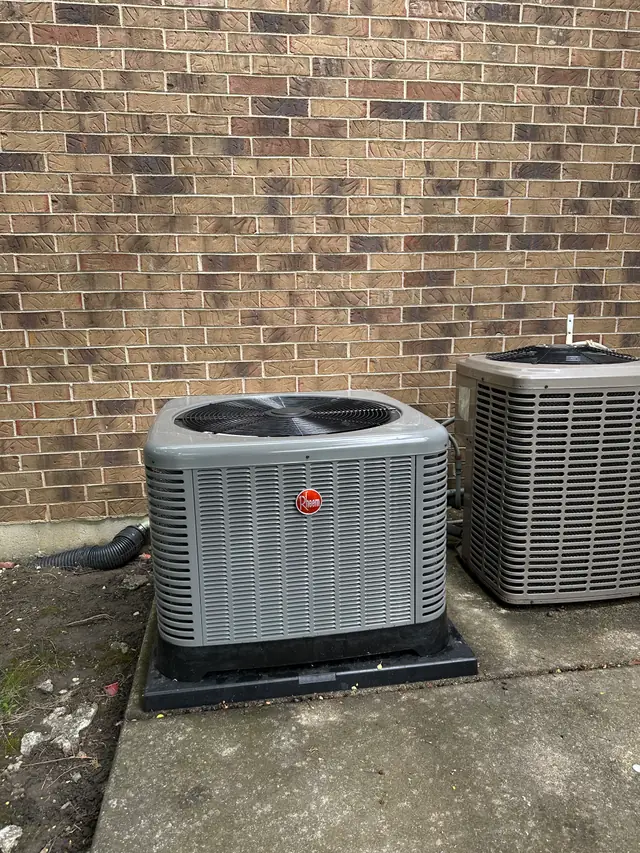
If you have ever priced out a new air conditioner, you have seen the letters SEER on every spec sheet. Brochures print it in big type and nobody stops to explain it. So here it is in plain terms, written for people living in Homer Glen, Orland Park, Tinley Park and the towns around them, where summers are sticky and the AC works hard from June through early September.
What SEER stands for
SEER is short for seasonal energy efficiency ratio. It tells you how much cooling a unit delivers for the electricity it uses over a typical cooling season. The higher the number, the less electricity it takes to move the same amount of heat out of your house.
Air conditioners are sold across a wide range. Ratings start at 13 and climb into the 20s. As a rule of thumb, a 20 SEER system does the same cooling work as a 10 SEER system on about half the power. Put another way, the 20 gives you twice the efficiency.
Why a bigger number is not always the best answer
Here is the part the brochures skip. SEER is a rating earned under test conditions. Your house is not a test lab. A higher-rated system only saves you money if it runs the way it was designed to run, and that depends on a handful of things that have nothing to do with the sticker.
- Ductwork: leaky, undersized or crushed ducts in an attic or crawl space will throw away cooling no matter what the rating says.
- Sizing: a unit that is too big cools the house fast, shuts off, and never runs long enough to pull humidity out of the air. Too small and it runs flat out all afternoon.
- Installation quality: refrigerant charge, airflow across the coil and a clean, level pad all change how close you get to the rated number.
- How much you actually run it: a house that sees the AC for ten weeks a year gets a different payback than a house where it never really stops.
A mid-range unit installed carefully into good ductwork will often beat a top-rated unit dropped onto bad ducts. If a contractor only talks about the number and never asks to look at your ducts, that is worth noticing.
What summers around here ask of an AC
Chicagoland summers are not Phoenix. We get a long shoulder season where the AC cycles on and off, then a few stretches of heat and humidity where it runs for hours. That mix matters. In the milder weeks, a system that can run at lower speed and hold a steady temperature feels better, and quietly pulls moisture out of the air. In the heat waves, a system that is correctly sized keeps up without running itself ragged.
A bedroom that never gets comfortable even at 74 degrees, or a house that feels clammy right after the AC shuts off, is often a sizing or airflow problem, not a SEER problem.
How to compare two quotes fairly
When you have two or three proposals in hand, line them up on more than the efficiency number. Ask each contractor the same questions and write the answers down.
- What SEER rating is the system, and is the outdoor unit matched to the indoor coil or air handler?
- How did you decide on the size? Did anyone walk the house, or just look at the old unit?
- Did you look at my ducts, and what did you see?
- What is covered if the install itself has a problem, and who do I call?
- What does yearly maintenance involve for this system?
You are not trying to catch anyone out. You are trying to find the person who treats the install as the main event and the rating as one line on the page. One reviewer of Climaxx wrote that Justin took the time to explain everything clearly, and that is the right instinct to look for from anybody you let into your attic.
When a higher SEER makes the most sense
A higher rating tends to make the most sense when the AC runs a lot, when you plan to stay in the house for many years, and when the ductwork is in decent shape. If you are in a two-story in Lemont or New Lenox with a finished attic that bakes all summer, the extra efficiency has more hours to pay you back. If you are in a small ranch that uses the AC a few weeks a year, a solid mid-range unit installed well may be the smarter spend.
There is no universal right answer, and anyone who says there is one without seeing your house is guessing. Be honest about how you use the place. Do you keep it at 72 all summer or only run it on the worst days? Do you work from home? Does the upstairs always run hotter than the first floor?
Do not skip the yearly checkup
Whatever you buy, efficiency fades when a coil is dirty, a filter is clogged or the refrigerant charge drifts. A yearly clean and check keeps a good system performing close to what you paid for. Treat it like an oil change: boring, and easy to put off until July when everyone's schedule is full.
Thinking about a replacement, or just want a second opinion on a quote you already have? Climaxx Heating & Cooling services Homer Glen, Frankfort, Mokena and the rest of the southwest suburbs, and the line is open any hour. Call (708) 717-2772 and ask for a straight answer on what your house actually needs.
Climaxx Heating & Cooling, (708) 717-2772
Call (708) 717-2772More articles
AFUE Explained: 80% vs 95% Furnaces and When the Upgrade Makes Sense
Think of AFUE as the share of every dollar of gas that ends up warming your house instead of going up the flue.
Is Your Old Boiler Worth Keeping? Reading Efficiency by Age
Boilers can run for decades, but efficiency slips with age. Here is how to read where yours stands.